
 Image 1 of 1
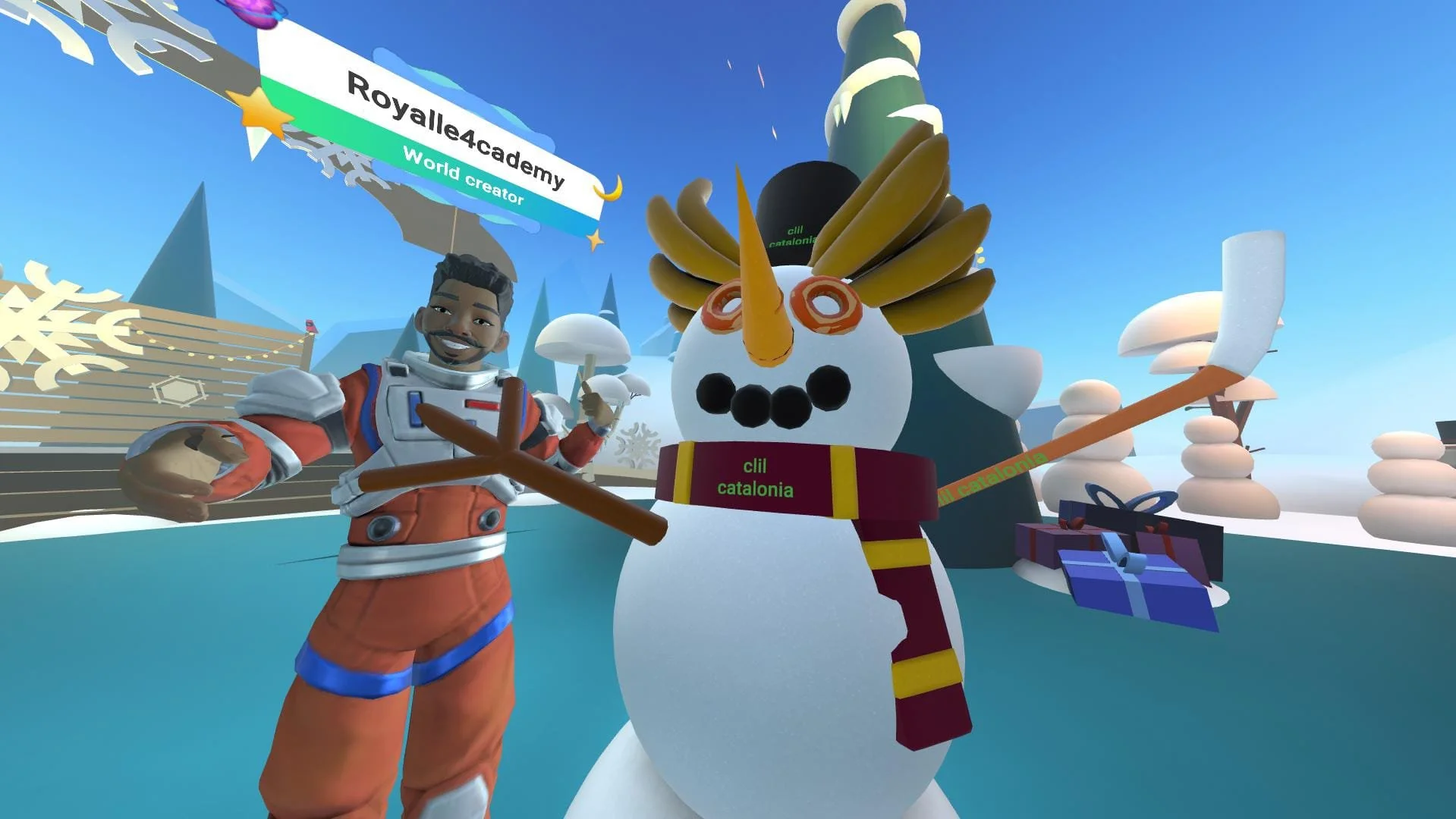
5h Festive promotional VR Event
VR ESL Onsite Experience:
Overview:
Two trained technicians arrive at your school to run a five-hour VR ESL event designed to showcase immersive language learning to students, teachers, and prospective clients. The experience demonstrates how VR transforms vocabulary acquisition, pronunciation, listening comprehension, situational awareness, and classroom engagement.
What we bring and set up
Two technicians: full-service support from arrival through breakdown.
Equipment: multiple VR headsets, sanitizable face covers, controllers, headphones, charging stations, tablets for non-VR users and a compact laptop hub for maintenance and quality control.
Content library: curated ESL scenarios and mini-lessons spanning beginner to advanced levels — conversational practice, situational role-plays, vocabulary labs, listening comprehension exercises, and cultural tours.
Portable staging: simple signage, small demo stations (tabletop kiosks), and a registration/table for check-in and feedback.
Typical five-hour flow (flexible to your schedule)
Arrival & Setup (30–45 minutes)
Technicians unload, configure devices, test connectivity, set physical safety zones, and stage demo stations.
Welcome & Orientation (15 minutes)
Brief introduction to VR safety, hygiene protocols, learning objectives, and a short live demo.
Open Demo Sessions (3 hours)
Rotating 15–20 minute VR sessions for students and visitors: technicians guide users through headset setup, calibration, and the learning module, then debrief on learning points and team objectives.
Parallel tracks: one technician runs student groups in curriculum-aligned modules while the other is available to provide instruction and information, inform on safety rules and protocols and ensure a fluid and successful experience for the students.
Scheduled Group Workshops (60 minutes)
Two short, instructor-led mini-workshops offering a collaborative VR challenge or role-play.
Breakdown & Departure (15–30 minutes)
Technicians collect feedback, schedule follow-ups, clean and pack equipment, ensure spaces are returned to original condition, and deliver a brief event summary and contact info.
What participants experience:
Students: Engaging, interactive language practice within realistic and surreal contexts from shopping & travel to extraterrestrial exploration, immediate pronunciation coaching, and confidence-building repetition.
Educators: Clear examples of lesson integration, performance analytics, and classroom management tips for blended VR/face-to-face instruction.
Safety, hygiene & inclusivity
Headset disinfecting between uses, disposable/replaceable facial interfaces, and hand-sanitiser stations.
Technicians trained in basic first aid and VR comfort monitoring; immediate removal protocol if a user feels unwell.
Deliverables after the event
Summary report with participant counts, qualitative feedback, and technician observations.
Demo content list and suggested plans tailored to your school.
Contact for follow-up meetings, pricing proposals, and classroom integration support.
Benefits
Immediate, memorable proof that VR can increase student engagement and accelerate language acquisition.
Potential increase in conversion rates for undecided clients and current students’ friends
Booking & logistics
Events are scheduled to suit school calendars (single-day assemblies, after-school showcases, Weekend and festive periods).
Minimum space requirement: a multipurpose room or classroom area that can be divided into small demo stations; access to power and a fast Wi‑Fi or temporary hotspot recommended.
Recommended audience size: up to 40–50 participants rotating across five hours for optimal experience; larger audiences accommodated with extended hours or multiple-day engagements.
Bring VR ESL to your school with a compact, high-impact event that lets students and decision-makers experience education like never before.
VR ESL Onsite Experience:
Overview:
Two trained technicians arrive at your school to run a five-hour VR ESL event designed to showcase immersive language learning to students, teachers, and prospective clients. The experience demonstrates how VR transforms vocabulary acquisition, pronunciation, listening comprehension, situational awareness, and classroom engagement.
What we bring and set up
Two technicians: full-service support from arrival through breakdown.
Equipment: multiple VR headsets, sanitizable face covers, controllers, headphones, charging stations, tablets for non-VR users and a compact laptop hub for maintenance and quality control.
Content library: curated ESL scenarios and mini-lessons spanning beginner to advanced levels — conversational practice, situational role-plays, vocabulary labs, listening comprehension exercises, and cultural tours.
Portable staging: simple signage, small demo stations (tabletop kiosks), and a registration/table for check-in and feedback.
Typical five-hour flow (flexible to your schedule)
Arrival & Setup (30–45 minutes)
Technicians unload, configure devices, test connectivity, set physical safety zones, and stage demo stations.
Welcome & Orientation (15 minutes)
Brief introduction to VR safety, hygiene protocols, learning objectives, and a short live demo.
Open Demo Sessions (3 hours)
Rotating 15–20 minute VR sessions for students and visitors: technicians guide users through headset setup, calibration, and the learning module, then debrief on learning points and team objectives.
Parallel tracks: one technician runs student groups in curriculum-aligned modules while the other is available to provide instruction and information, inform on safety rules and protocols and ensure a fluid and successful experience for the students.
Scheduled Group Workshops (60 minutes)
Two short, instructor-led mini-workshops offering a collaborative VR challenge or role-play.
Breakdown & Departure (15–30 minutes)
Technicians collect feedback, schedule follow-ups, clean and pack equipment, ensure spaces are returned to original condition, and deliver a brief event summary and contact info.
What participants experience:
Students: Engaging, interactive language practice within realistic and surreal contexts from shopping & travel to extraterrestrial exploration, immediate pronunciation coaching, and confidence-building repetition.
Educators: Clear examples of lesson integration, performance analytics, and classroom management tips for blended VR/face-to-face instruction.
Safety, hygiene & inclusivity
Headset disinfecting between uses, disposable/replaceable facial interfaces, and hand-sanitiser stations.
Technicians trained in basic first aid and VR comfort monitoring; immediate removal protocol if a user feels unwell.
Deliverables after the event
Summary report with participant counts, qualitative feedback, and technician observations.
Demo content list and suggested plans tailored to your school.
Contact for follow-up meetings, pricing proposals, and classroom integration support.
Benefits
Immediate, memorable proof that VR can increase student engagement and accelerate language acquisition.
Potential increase in conversion rates for undecided clients and current students’ friends
Booking & logistics
Events are scheduled to suit school calendars (single-day assemblies, after-school showcases, Weekend and festive periods).
Minimum space requirement: a multipurpose room or classroom area that can be divided into small demo stations; access to power and a fast Wi‑Fi or temporary hotspot recommended.
Recommended audience size: up to 40–50 participants rotating across five hours for optimal experience; larger audiences accommodated with extended hours or multiple-day engagements.
Bring VR ESL to your school with a compact, high-impact event that lets students and decision-makers experience education like never before.